How do you determine heading when you cannot rely on a magnetic compass?
For many modern platforms, knowing where you are heading is just as important as knowing where you are.
Aircraft, UAVs, maritime platforms and autonomous systems all require accurate orientation information to control movement, maintain a planned trajectory and execute their missions.
Traditionally, magnetic compasses and magnetometers have been widely used to determine heading. However, magnetic sensors can become challenging to use in environments affected by magnetic interference, nearby metallic structures or electromagnetic sources.
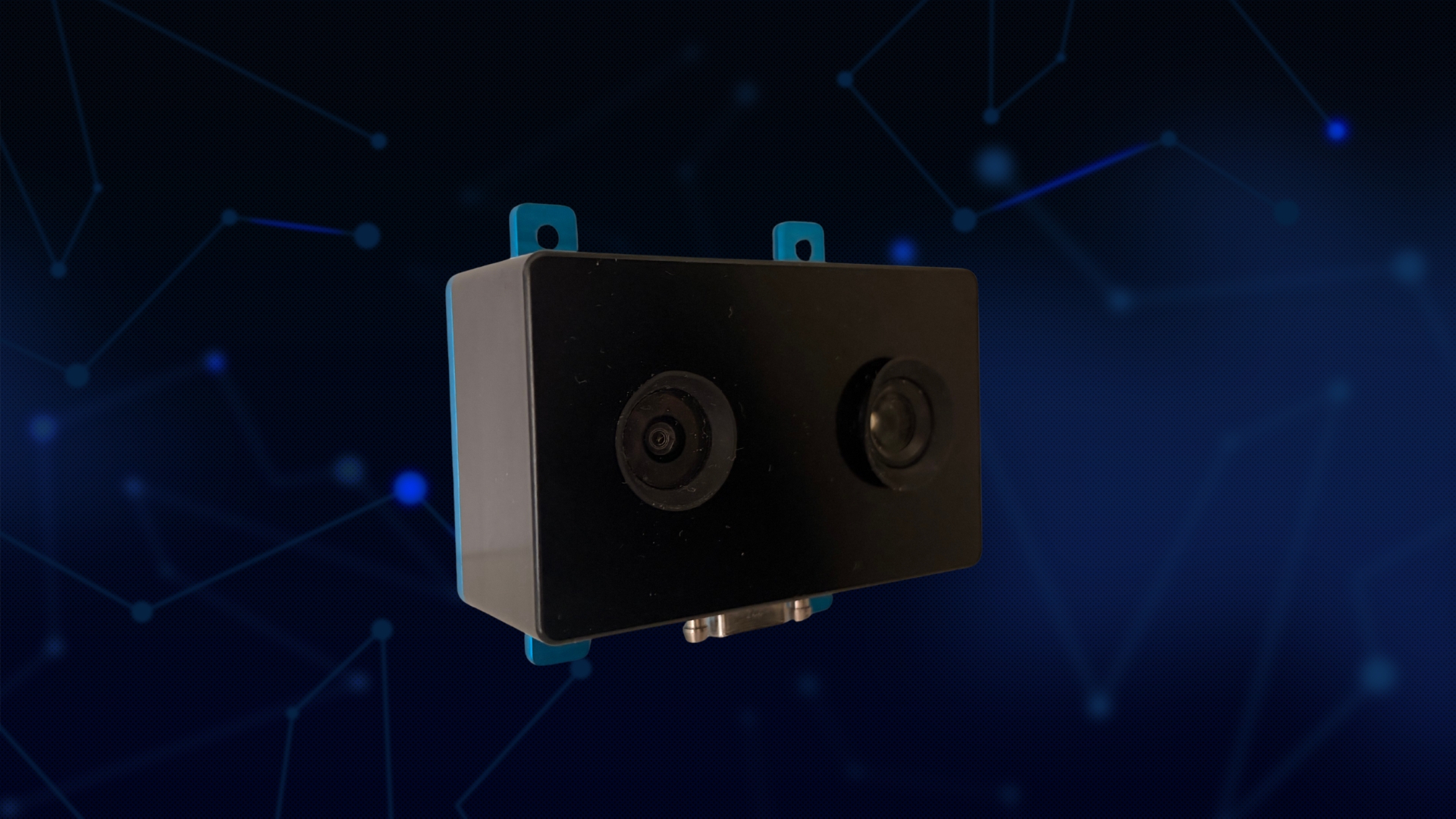
The STELION Heading Sensor (SHS) takes a different approach.
Instead of measuring the Earth’s magnetic field, SHS uses optical sensing and celestial references to determine heading.
Heading without magnetic north
A conventional magnetic compass determines heading by measuring the direction of the Earth’s magnetic field.
This approach is effective in many environments, but the magnetic field around a platform is rarely perfectly clean.
Large metallic structures, motors, electrical systems, power cables and other onboard equipment can create magnetic disturbances. On defence platforms, additional equipment and changing configurations can make magnetic calibration and compensation more challenging.
SHS does not depend on magnetic north.
Instead, it observes the sky and uses identifiable celestial references to establish an absolute heading reference.
This provides a fundamentally different way of determining orientation.
How does SHS work?
At a high level, the SHS navigation process can be understood in four stages:
1. Observe
The optical sensor captures images of the surrounding sky within its field of view.
2. Identify
The onboard processing system analyses the captured information to identify suitable celestial references.
3. Determine orientation
The detected references are compared with their known positions to determine the platform’s orientation relative to the celestial reference frame.
4. Deliver heading information
The resulting heading information can then be provided to the platform’s navigation or control system.
The process happens automatically, allowing the sensor to provide heading information without requiring an external magnetic reference.
Why optical heading?
The key advantage of an optical approach is that it uses a different physical reference from a magnetometer.
This can be particularly useful for platforms where magnetic interference is a concern.
SHS is designed to provide heading information with an accuracy of up to 0.1°, making it suitable for applications where precise orientation is important.
The sensor is also designed for day and night operation, allowing the same fundamental navigation principle to be used across different operating conditions.
Designed for integration
A navigation sensor is only useful if it can be integrated effectively into the platform.
SHS has been designed with compact platforms and system integration in mind, with a small form factor, low power consumption and a lightweight design.
The sensor provides digital communication through RS-422, with NMEA output available for production configurations, allowing heading information to be incorporated into existing navigation architectures.
This makes SHS suitable for integration alongside other onboard navigation technologies rather than requiring an entirely new navigation system.
Heading in GNSS-denied environments
Heading and positioning are closely related, but they are not the same navigation problem.
A platform may have access to GNSS positioning while experiencing unreliable heading information, or it may need an independent heading reference when GNSS is unavailable.
SHS can provide an optical heading reference that does not depend on GNSS signals or magnetic north.
This makes the technology particularly relevant to platforms operating in GNSS-degraded or GNSS-denied environments, where maintaining reliable orientation information can be an important part of the overall navigation architecture.
SHS can also complement other navigation technologies, including inertial systems, GNSS receivers and additional optical sensors.
Applications
Accurate heading information can support a wide range of platforms and applications.
Potential applications for SHS include:
- UAVs and autonomous aerial platforms
- Maritime and unmanned surface vessels
- Defence platforms
- Autonomous systems
- Situational awareness systems
- Platforms operating in magnetically challenging environments
For autonomous platforms in particular, reliable heading information can contribute to more accurate trajectory control and improve the ability of the platform to maintain its intended direction.
A different way to find direction
The concept behind SHS is simple: you do not always need a compass to know where you are pointing.
By using optical observations of the sky as a reference, SHS provides an alternative approach to heading determination that avoids dependence on magnetic north.
For modern platforms operating in increasingly complex environments, having access to multiple independent navigation references can be an important part of building a resilient navigation architecture.
SHS brings celestial referencing to heading determination, providing a precise optical alternative when magnetic heading is not enough.
Discover STELION Heading
STELION Heading Sensor (SHS) is an optical heading solution designed for precise orientation measurement across demanding applications.
Discover how SHS can provide an independent heading reference for your platform.